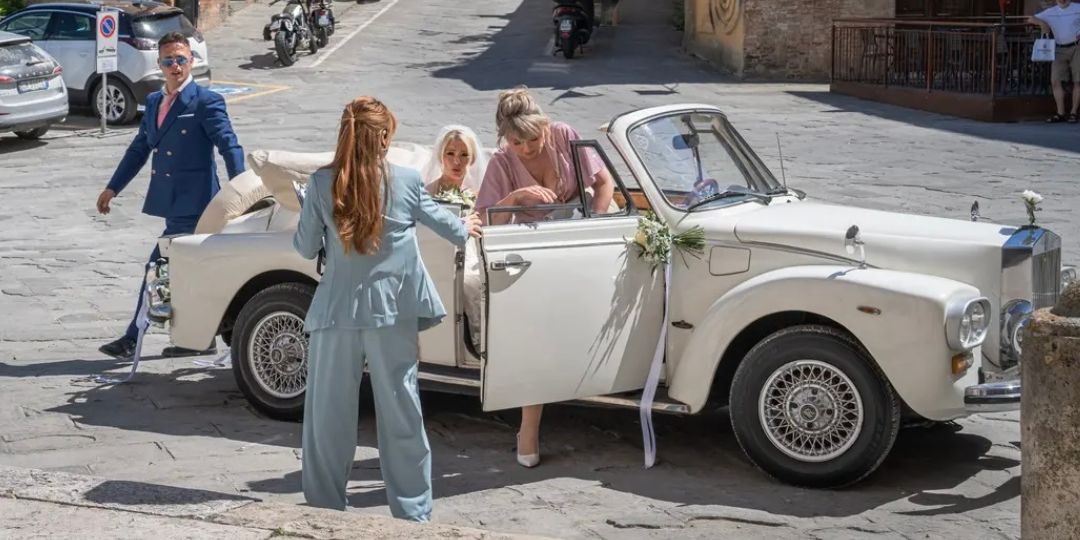
In Italy, we were introduced to the role of the wedding planner in 2001, thanks to Jennifer Lopez’s charismatic performance in the film *The Wedding Planner*; from that point on, the allure of American-style weddings captivated us, inspiring dreams that extended beyond the silver screen into real life. This was followed by a succession of reality shows, movies, and TV series that portrayed the profession, often in a way that was more glamorous than realistic, right up to the present day. Yet, the exact role of a wedding planner is not entirely clear to everyone. Let’s find out together.
What does a wedding planner actually do? Spoiler: much more than you imagine.
A wedding planner is quite literally an organizer of weddings (not to be confused with a wedding designer, who focuses specifically on the creative aspects). Consequently, a wedding planner is a professional who manages the entire wedding from start to finish, handling everything from budget management to the overall event concept. They dedicate themselves to finding the ideal venue, vendors, and services, all while interpreting and bringing to life the couple’s vision for their big day. A skilled wedding planner is constantly seeking new vendors and refining their team selection; this enables them to offer the client not only a top-tier professional but also one whose style best aligns with the event’s mood.
What should you look for in a good wedding planner?
We have discussed this at length in this article, but it is worth briefly reiterating. A good wedding planner should possess strong communication skills, experience, and empathy, as well as a style that aligns with your tastes; they also need to be discreet and diplomatic, and provide clear, detailed quotes and contracts. The role of a wedding planner is a delicate one, involving the management of both emotions and significant budgets; the relationship formed often extends well beyond the wedding day—something I have experienced firsthand with many couples I remain in touch with years later. Therefore, finding the right planner requires a careful, timely search and, above all, an in-person meeting whenever possible.
What does an assistant wedding planner do?
Wedding planners never work alone; they are almost always supported by assistants—especially on the day of the event, when it is necessary to cover multiple areas of the venue and keep a watchful eye on everything. But what exactly does an assistant do? Their duties certainly include answering guests’ questions and providing support as needed; welcoming attendees and guiding them to different areas of the venue depending on the schedule of events; assisting vendors with their tasks; and staying close to the bride and groom to help manage any unexpected issues. The ideal candidate is proactive, empathetic, and results-oriented, with a strong team spirit. Needless to say, just as with the wedding planner, foreign language skills are essential.
How much does a dream cost? A guide to wedding planner quotes
The cost of a wedding planner varies significantly depending on the type of wedding and the planner’s level of experience; for full-service planning of a medium-sized wedding in Italy, costs typically range from €3,000 to €6,000. For those seeking only a day-of coordinator, the price depends on the quality of service provided, specifically, whether it includes a site visit and a briefing with all the vendors previously selected by the couple. A wedding planner’s quote should cover budget and timeline management, consultation on various aspects (ranging from bureaucratic matters to stylistic details), and coordination tasks leading up to and during the ceremony itself. Depending on the event’s complexity, arrangements for guest transportation, accommodation, and other details requiring careful planning may also be included in the scope of work.
10 good reasons to have a (good) wedding planner
Hiring a professional wedding planner—and it is worth specifying this, as not all planners are created equal—offers numerous advantages that can make the difference between an ordinary wedding and a dream wedding.
Here are 10 great reasons to have a (good) wedding planner:
1. Stress Management: A good wedding planner handles a multitude of details, allowing you to enjoy your wedding day without anxiety or worry.
2. Budget Under Control: An experienced wedding planner has the expertise to allocate the budget effectively, understanding actual costs and negotiating with vendors to prevent unnecessary expenses or costly surprises wherever possible.
3. Access to a selection of qualified vendors: Expert planners possess an established network of contacts with top industry professionals (caterers, florists, photographers, musicians), ensuring quality and reliability.
4. Time savings: Planning a wedding requires hundreds of hours of work (over 500, if you are wondering about the specific figure). A planner efficiently handles all research and communication—leveraging their experience and network of contacts—thereby saving you precious time.
5. Design: They support the realization of your vision by providing original, detailed solutions and ensuring that every aspect aligns with the desired style.
6. Diplomatic mediation: You will have an intermediary between you and your families (with their diverse opinions) as well as the vendors, helping you manage any potential conflicts or difficulties.
7. Logistics and problem-solving skills: I am capable of handling complex logistics, planning alternative solutions, and resolving a wide range of unexpected issues in a timely manner.
8. Acting as “Director” on the wedding day: On the day of the wedding, the planner manages all vendors and the schedule, ensuring that everything runs smoothly and perfectly, allowing you and your guests to enjoy the moment.
9. Experience Makes the Difference: Wedding planners have planned dozens upon dozens of weddings. They know exactly what works, what to avoid, and how to achieve the best result for your special day.
10. Looks out for your interests: A good wedding planner has your best interests at heart and will seek out the best possible solution for you.
Mind you, this doesn’t mean a wedding planner can’t make mistakes—we’re human too!
How do you become a wedding planner?
And here we are, the final question for anyone wishing to delve into this profession. You might think that becoming a wedding planner requires specific courses—perhaps through accredited bodies, or even a degree or a vocational diploma. Nothing could be further from the truth. To become a wedding planner (or, to use the official legal classification, an “organizer of parties and ceremonies”), all you need to do is go to the Revenue Agency and register for a VAT number, that’s it.
It is also true that this process won’t magically give you the skills you need. While taking a solid course can certainly help, serving as a good starting point, it isn’t enough on its own; just as a photography course doesn’t make you a photographer, and a makeup or floral arrangement course doesn’t make you a makeup artist or floral designer. The truth is that you never stop learning and staying up to date, exactly as with any other profession.
Undoubtedly, experience makes the difference (along with the ability to keep up with the times); so, it always comes back to this: the more elaborate the wedding you envision, the more you need a seasoned professional, and, of course, their entire team of collaborators. I can assure you that every wedding is unique, and handling every situation with care while making a genuine contribution is not as simple as it might seem. If, after reading this article, you still have questions and would like to chat, let’s talk, I am certain we will find the perfect solution for your big day.