
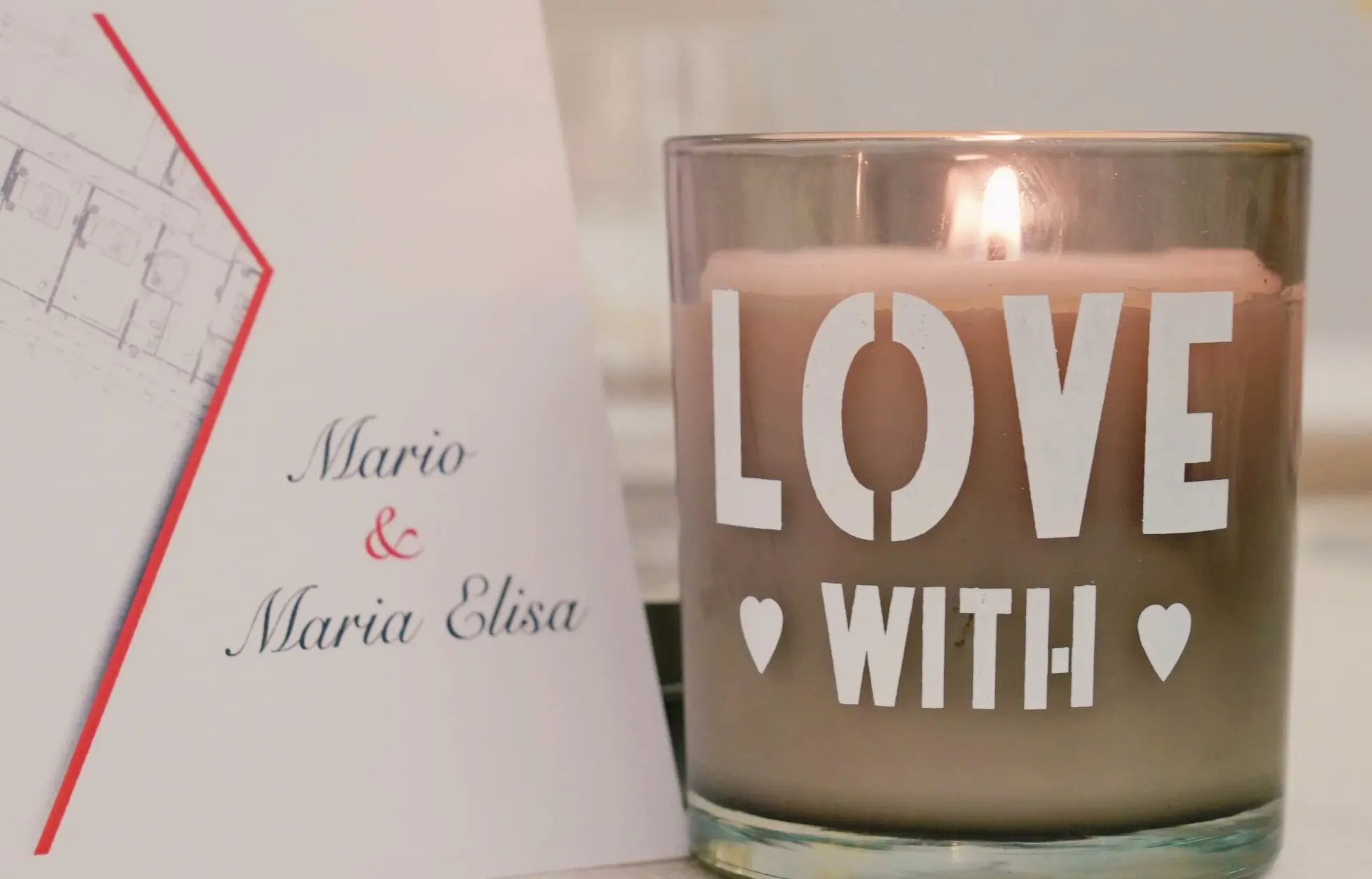
Certainly, when you begin organizing a wedding, you cannot overlook the stationery suite because this, along with flowers and various decorations, helps create the style of the event, characterizes it, and therefore makes it unique.
Wedding Announcements
Let’s start right away by making a distinction between the announcement and the invitation. Announcements are precisely meant to share the joy of the happy event, so whoever receives them can decide to attend the ceremony without the need to bring a gift or RSVP. The invitation, on the other hand, also includes information regarding the reception: where it will be held, what time, if there is a dress code, etc. Those who receive it must confirm their attendance or decline (which is very important for catering and seating arrangements) and have, so to speak, the moral obligation to give a gift to the couple.
The custom of sending out separate announcements has now become obsolete and mostly dates back to weddings celebrated in the Church, where it was customary to invite almost all acquaintances to the ceremony while the invitation was reserved for close family and friends. That said, the announcement can also be delivered a month and a half before the wedding. As for its structure, it contains only a fraction of the information found in an invitation, so I would suggest diving straight into the design of the wedding invitation.
Wedding Invitations
A wedding invitation usually includes:
- the names of the couple (tradition dictates that the parents should announce the wedding, but it is increasingly common for the couple themselves to make the announcement);
- the wedding date;
- the time and location of the ceremony;
- the time and location of the reception;
- any additional guidelines or provisions;
- the RSVP deadline;
- contact details for confirmation and for reporting food allergies or preferences;
- wedding gift instructions.
Wedding Planner’s Tip: Including the IBAN bank details for cash transfers directly on the invitation is not very elegant. I completely understand the practicality of it, but there are other, softer ways to hint that you would appreciate a monetary gift.
Materials Used for Wedding Stationery
Long live creativity! The materials used for wedding stationery can be the most diverse: not just paper, but also wood, plexiglass, fabric inserts, leather, eco-leather, other materials with an ecological component, and so on. Certainly, paper is the most widely used material, also because it allows for a wide range of choices in terms of types and colors, and compared to other materials, it is easier to work with.
Save the Date
Invitations should be hand-delivered three months before the wedding, but there are circumstances where it is necessary to communicate the happy event with much more advance notice, for example, to give guests time to book flights and organize themselves ahead of time. This is where “Save the Dates” come to our rescue: an Anglo-Saxon tradition that simply contains information about the date and location, and can even be purely digital.
Wedding Ceremony Booklets
Ceremony booklets allow guests to follow the celebration whether religious, symbolic, or even civil if enriched with personalizations (as we discussed here). The number of booklets to print should be roughly one for every two or three guests, and besides your names and the wedding date, you can mention the officiant, the church (or venue), and the witnesses. The booklet must obviously contain the chosen readings and ritual formulas. Please make sure to choose an easily readable font; you can save the stylistic flourishes for the headers. As always, consult your Wedding Planner and trusted graphic designer.
Wedding Tableau de Mariage
In my opinion, this is the most fun part because it allows your imagination to run wild—not only with the graphics, which must be consistent starting from the invitations and save-the-dates, but also because it lets you give whatever names you prefer to the tables. For example, you can choose names of flowers, colors, books, songs, or important dates for you… Generally speaking, keep it aligned with the theme or mood of the wedding.
In this case, you need to consider that the stationery will be twofold: there will be the display placed at the entrance of the reception area with the guests’ names (e.g., Peony Table, Rossi Family, Bianchi Family, etc.), and the markers placed directly on each table with the table name (e.g., Peony Table).
If the wedding is very formal, you can choose to write both first and last names; generally, it is much more common to write just the guest’s first name, paying attention to potential homonyms. If it is a family with children, it is enough to use the last name preceded by the word “Family” (Famiglia).
Wedding Menu Graphics
Regarding wedding menu graphics, remember that only the courses served at the table should be included, excluding the welcome buffet, precisely because the menus are found at the table and not beforehand. As for quantities, you can decide to print one menu per guest—making distinctions for those with different dietary needs (children’s menus, vegan, dairy-free, etc., which will feature a slightly different menu). Another solution is to opt for table menus: in this case, 2 menus are enough for tables of 8 to 10 people, while for smaller numbers, a single menu is sufficient.
Wedding Stationery Price List
Below are some prices regarding wedding stationery to give you a general idea of costs. Of course, everything is relative and depends heavily on whether you choose unique, customized solutions or select designs from ready-made proposals.
- Wedding invitations: €2 each
- Vow booklets (Libretti delle promesse): €4 each
- Tableau de Mariage cards: €2 each
- Adhesive lettering: €15
- Centerpiece menus: €2 each
- Individual menus: €1 each
- Graphic project setup: €20
Remember that the entire stationery suite must be cohesive, otherwise it wouldn’t be called a “suite.” Therefore, think carefully right from the invitations about which style you prefer because you will then need to maintain it throughout all the stages of the wedding, right up to the thank-you notes, which are usually sent out once you have returned from your honeymoon.

1. What is the main difference between a wedding announcement (partecipazione) and an invitation?
The announcement simply shares the news of the happy event (recipients can attend the ceremony without the obligation to give a gift or RSVP). The invitation, on the other hand, includes all details about the reception (location, time, dress code), requires a mandatory RSVP (crucial for catering and seating), and carries the moral obligation to bring a wedding gift.
2. What does a wedding invitation usually contain?
An invitation typically includes: the names of the couple, the wedding date, the time and location of the ceremony, the time and location of the reception, any additional guidelines, the RSVP deadline, contact details for confirmations and dietary restrictions/allergies, and wedding gift instructions.
3. What are “Save the Date” cards and when are they used?
Of Anglo-Saxon origin, these are notices containing simply the date and location of the wedding. They are sent out well in advance (earlier than the standard three-month invitation window) when guests need extra time to plan ahead, such as booking flights. They can also be purely digital.
4. How should wedding ceremony booklets (libretti messa) be structured and how many should be printed?
The ideal quantity to print is one booklet for every two or three guests. They should contain the names of the couple, the date, the officiant, the church (or venue), the witnesses, the chosen readings, and the ritual formulas, using an easily readable font.
5. How does the graphics of the tableau de mariage work?
The stationery is twofold: one display is placed at the entrance of the reception area listing the guests assigned to each table (e.g., Peony Table – Rossi Family), while individual markers are placed directly on the tables bearing the table name.
6. What are the options for wedding menus?
They should only list the courses served at the table (excluding the welcome buffet). You can choose to print one menu per guest (creating customized versions for specific dietary needs like children’s or vegan menus) or opt for table menus (2 menus are enough for tables of 8–10 people).

