
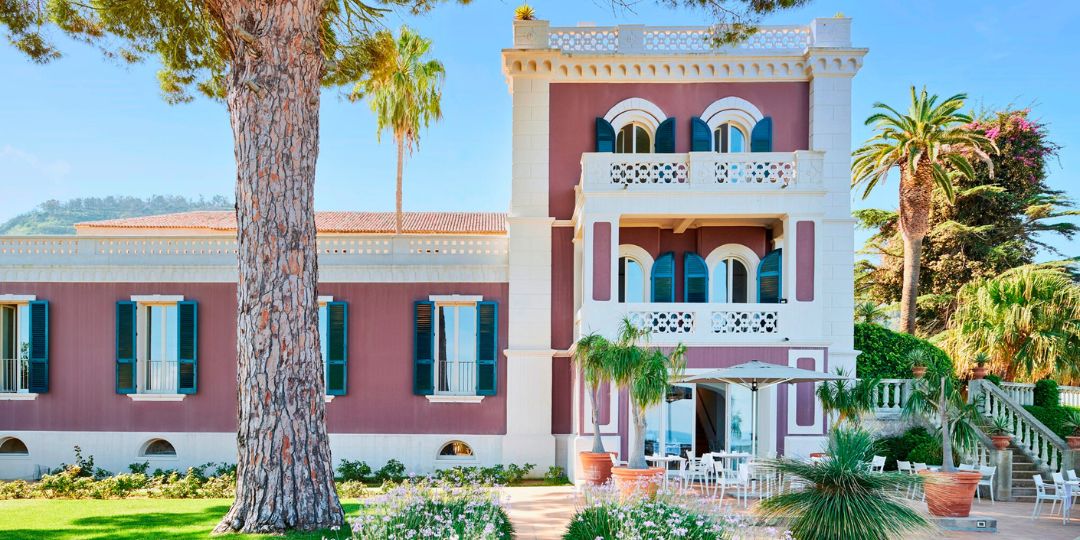
I don’t think there is any topic closer to my heart than wedding venues. Throughout my years in the industry, I have frequently encountered this issue, as the majority of problems that can arise at a wedding stem from choosing the wrong venue. The choice of venue shapes the style of the entire event (including the bride’s and groom’s attire) and impacts both the guests’ overall experience and the performance of your vendors.
Types of wedding venues: how to navigate your options
First, however, let’s outline the main types of wedding venues, along with their characteristics, strengths, and weaknesses. Then, we will discuss wedding villas and estates in greater detail.
Outdoor wedding venues
If you are deeply committed to eco-friendly values, love nature, or simply want a wedding that isn’t overly formal, “agriturismi” (farmhouse estates) and “masserie” (traditional fortified farmhouses) might be the perfect choice for you. I must say that this type of venue is very trendy; in fact, it is the one most frequently requested by both Italian and international couples.
The strong point of these venues is that they produce many of the culinary items served at the reception—such as wine, olive oil, jams, preserves, and garden-fresh vegetables. On the other hand, a potential downside is accessibility; they may be remote or located at the end of country roads, making the journey somewhat inconvenient.
Luxury hotels
If you’re looking for a luxury wedding venue, you might consider truly exclusive hotels. Luxury hotels have the advantage of being located in the city center and offering accommodations to all your guests. Suites often boast incredible views of the city’s most important and significant monuments.
Personally, I know of some truly beautiful ones in Florence, on Lake Como, along the Amalfi Coast, and in Tropea (among other places). Some even house Michelin-starred restaurants and world-class spas; I have occasionally come across chapels painted by famous artists or other artworks integrated into these venues—treasures preserved and hidden from the public eye.
The downside might be that the reception halls can feel a bit “colder” or more impersonal compared to other settings, but that is a matter of taste.
Resorts: wedding venues with a pool
A resort is essentially a middle ground between a country estate (agriturismo) and a hotel; it offers the services of the latter but is set in a natural environment, far from the city’s hectic pace. Some of these properties are veritable “cathedrals in the wilderness”—wonderful, unexpected surprises amidst the rural landscape.
So, if you are still undecided, consider this type of venue; as the old saying goes, “virtue lies in the middle.”
Mountain wedding venues
I admit that getting married in a mountain chalet is a rather unusual request, it is a unique choice of venue, but I can guarantee a “wow” factor! Nature lovers certainly won’t be disappointed here either; however, keep in mind that these venues are best suited for weddings with a smaller guest list.
In these settings, you can also arrange bespoke experiences designed specifically for you, allowing you to discover and appreciate the local area even more. For this, simply consult a Travel Designer or planner with the right expertise.

A castle as your wedding venue
For incurable romantics who grew up watching famous fairy tales, this is your moment! If you dream of a royal wedding fit for a princess, castles, palaces, and historic noble estates are waiting for you. Castles are truly fairytale venues for a wedding straight out of *One Thousand and One Nights*.
You can treat yourselves to the dream of feeling like a king or queen for a day, dancing beneath grand crystal chandeliers—and perhaps, who knows, even flying off on a magic carpet at the end.
Yes, as you can tell, I’m a hopeless romantic too!
However, these charming venues can present challenges due to their historic nature. For instance, the lighting is often inadequate; they can become gloomy in the evening (unless the owners were forward-thinking), requiring the installation of additional light fixtures—an extra expense to consider. They are also frequently not easily accessible for wheelchairs or people with limited mobility.
Keep in mind that, as heritage properties, they are subject to preservation restrictions, meaning not all types of structural alterations are permitted. Therefore, assess whether these issues apply.
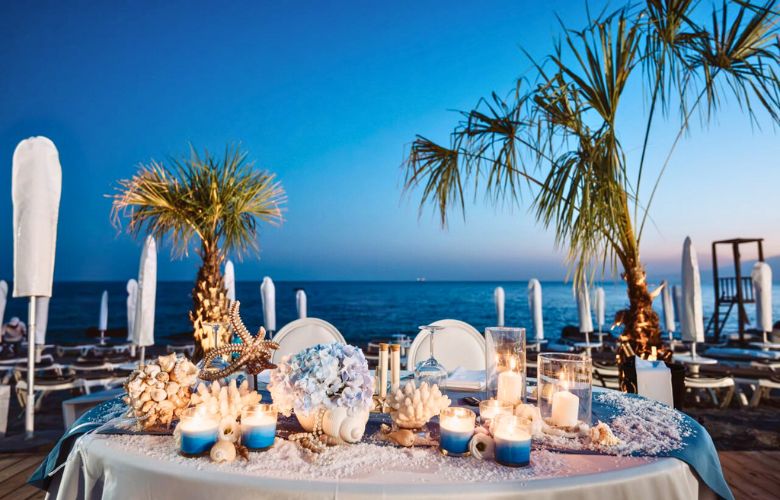
Seaside venues: a wedding with a view
If you dream of a beach wedding or simply one with a sea view, the choice is fairly obvious—and you are in luck. With around 8,300 km of coastline, Italy offers a vast array of truly stunning seaside wedding venues, such as beach clubs with private beaches.
However, bear in mind that organizing a beach wedding can entail specific challenges—such as logistics regarding accessibility and the transport of materials for décor and catering, which can be more complex; exposure to wind, sun, and potential bad weather; and the need for a proper “Plan B.” Furthermore, the beach is not a consecrated site, and (as things stand) it is rarely possible to hold civil ceremonies there either.
If you are located further inland, lakeside villas offer a wonderful “water-themed” alternative. The wedding venues on Lake Como are a prime example. Not convinced yet? Then imagine getting married in Venice—a truly unique city that makes for the perfect wedding backdrop.
Can you picture a more romantic setting?
Alternatively, you might consider a panoramic terrace for your wedding ceremony. In this case, however, you must factor in the weather and logistics—as well as distance and transportation, should the terrace be separate from the main venue. Once those details are sorted, I can guarantee you’ll end up with spectacular photos!
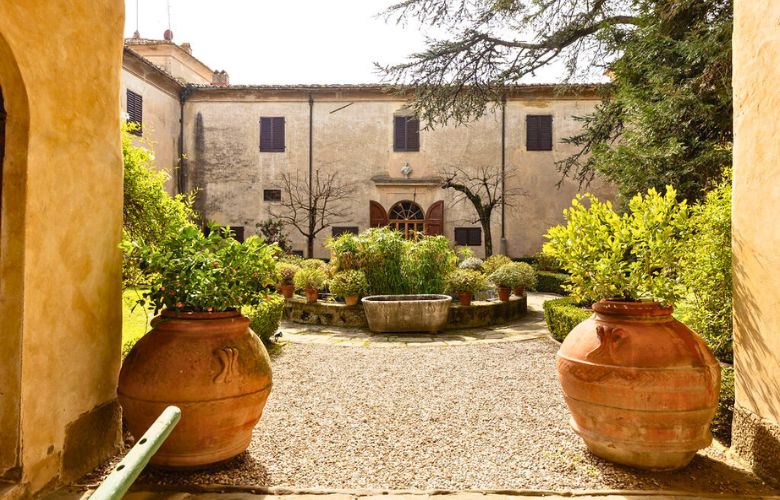
Wedding villas and estates: timeless charm
Needless to say, historic residences possess a unique charm all their own and deserve a section of their own. Elegance, open spaces, and picture-perfect, magazine-worthy settings—that is what you can expect when booking a historic villa or even an entire estate for your wedding. Of course, it is also true that not all regions of Italy offer the same possibilities.
Tuscany, for example, is rich in historic villas, and Sicily also boasts a fine heritage, though other areas have lost these precious gems due to various historical and geographical factors. Nevertheless, Italy still holds the top spot for history, art, culture, and traditions, and these architectural gems are not all that difficult to find.
Wedding venues range from the ultra-modern to the historic; indeed, one can find magnificent villas dating as far back as the 17th century. Getting married in a historic villa, complete with exquisite frescoes, ornamental gardens, and stately fireplaces, offers a unique experience where the present and the distant past blend to create a new memory: that of your wedding day.
This type of wedding venue calls for floral arrangements, attire, and table settings that rise to the occasion, reflecting the same lavish, romantic style to maintain a cohesive theme throughout. Yet, if you have chosen this setting, it is likely because it resonates with your personal style.
Reception halls and restaurants: practicality and style
Perhaps you aren’t looking for an exclusive venue, but rather something simpler and easier to manage, not too far from the city, offering a personalized menu at a reasonable price. If you are looking for a wedding venue with these qualities, you might want to consider restaurants and reception halls.
Wedding reception venues can be located within villas, resorts, or castles, or they may be standalone facilities, that is, spaces designed specifically for events. They may have in-house kitchens or work with external caterers, though services are provided only upon booking an event.
Restaurants, on the other hand, always have their own kitchens and operate on a daily basis, handling individual reservations while also occasionally catering to events and banquets. They may be independent establishments or integrated into other facilities, such as hotels and agritourism properties.
How to Choose the Perfect Wedding Venue
Now that we have a clear understanding of the main types of wedding venues, let’s look at how to choose the perfect one for your big day.
What factors should you consider? This is one of the most important aspects of wedding planning, as the venue will have a ripple effect on all your other decisions. Your choice of venue will influence everything from floral arrangements, décor elements, and stationery to the outfits themselves. But don’t panic!
As I always tell my couples, there is no single “right” choice, there is only what is right for you.
You have seen the potential of each location, but beyond your personal taste, critical aspects should not be underestimated: prevention is better than cure. The first sticking point concerns the civil ceremony.
If you plan to hold the ceremony at the reception venue itself, rather than at your local town hall, you will need a wedding venue that is officially authorized to host civil ceremonies. I fully support this choice, as an on-site reception is more beautiful, more convenient for guests, and allows for greater creativity.
If, on the other hand, the ceremony is purely symbolic, there are no particular issues, any wedding venue will do, but, just as with the wedding lunch or dinner, you must ensure there is a “Plan B.” This means having a covered alternative in case of bad weather, separate from the area where the reception will be held, that is spacious enough to accommodate all your guests.
Speaking from experience, I can tell you that venues generally tend to inflate their capacity figures—and significantly so—so be careful!
Other factors to consider include: whether the location is easily accessible; whether there is nearby hotel accommodation; whether the parking area is large enough; whether the premises are accessible to people with disabilities; whether there are exclusivity clauses or contractual restrictions; and, last but not least, regulations regarding music and the cost of extra hours.
If we really want to be meticulous, we should also consider the number of restrooms in proportion to the number of guests.
Dream wedding venues: unique ideas and inspiration for those seeking a “wow” factor!
There is only one way to achieve that “wow” factor: by creating something unexpected, something out of the ordinary. These are the weddings I prefer, events where imagination is free to express itself, while always maintaining the elegance appropriate for the occasion. So, if you are looking for a dream wedding venue, you have two options: choose an exclusive location, such as a historic estate, an ultra-luxury hotel, or a five-star resort, or opt for something unconventional.
This is where museums, deconsecrated churches or cathedrals, long-disused vintage factories, large greenhouses, theaters, and similar spaces can transform into dream wedding venues!
Always keep an eye on ancillary costs, logistics, and so on—no need to belabor the point. The “wow factor” often comes with a “wow” price tag. Sometimes, special permits and insurance are also required. I’m not saying it’s unfeasible, just that you need to make a comprehensive assessment.
In any case, whatever venue you choose, if you want to live out a dream, do not skimp on two other fundamental aspects: experiences for you and your guests, and the styling and décor. I cannot go into detail here; this topic deserves an article of its own.
Frequently asked questions about choosing a wedding venue
What is the difference between a villa, an estate, and a reception hall?A villa is a standalone structure that can serve as a wedding venue; it may be modern or historic, large or small, and feature various architectural styles. An estate is a much broader concept that can encompass multiple villas or reception halls. It covers a vast area with hectares of gardens, often including cultivated land. A reception hall is the specific room where the banquet is set up—usually within a villa, hotel, or castle—though they can occasionally be standalone structures.
How do you choose a wedding venue based on the number of guests?
You should always base your calculations on the indoor spaces rather than the garden—unless, of course, you are willing to set up a temporary marquee (conditions permitting). This isn’t a decision to make on your own; seek advice from an experienced professional wedding planner or, if you decide to go without one, from your trusted caterer. And do this before (not after) confirming the venue.
How far in advance should you book your wedding venue?
At least a year in advance to put your mind at ease. If you are getting married during the off-season, you can leave it a bit later, as there is less competition for those dates.
What is the best location for a seaside wedding?
Perhaps the question should be which type of wedding is suited to a beach setting, as it creates a unique atmosphere and I certainly wouldn’t recommend it in August, when it is too hot. In any case, beaches with breathtaking views, villas with direct beach access, well-equipped beach clubs, and restaurants overlooking the sea are undoubtedly the most suitable locations.

