
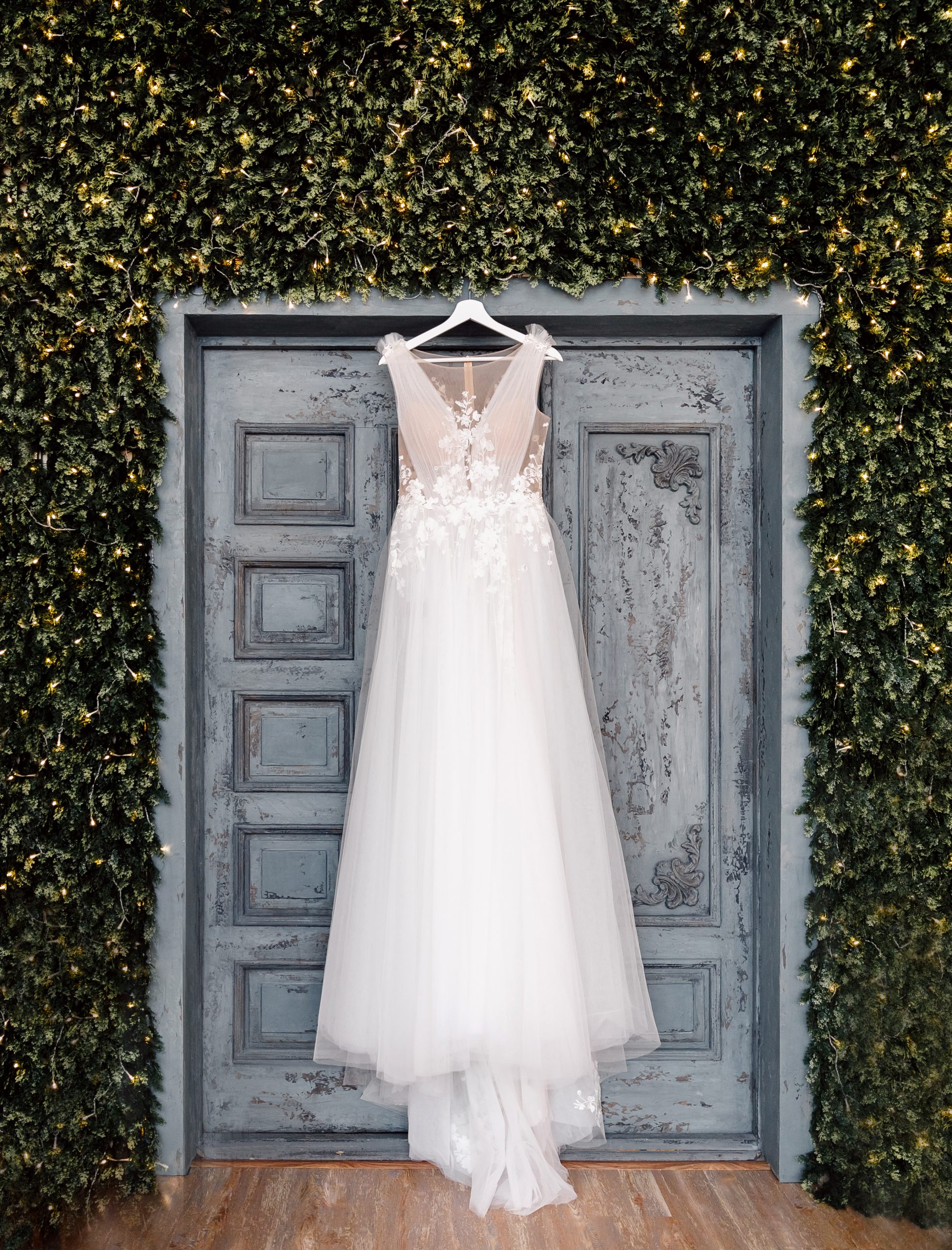
Choosing a wedding dress is no small matter; it is said that guests at a wedding will remember three things above all else: the food, the wedding favors, and… what the bride was wearing! That is why I want to start right away with two tips for choosing your wedding dress.
Planner’s Tip:
My first piece of advice is to visualize the overall setting before you start looking for your dream dress; this helps you avoid focusing on styles that aren’t right for the occasion—such as a gown with a long train for a countryside or beach wedding. If the ceremony is taking place at the town hall, it is best to opt for a dress with a more understated silhouette! My second tip is to consider your body shape when looking for styles that flatter you, highlighting your best features rather than accentuating minor imperfections.
A dress should flatter a woman; this isn’t a fashion show where the model fades into the background just to “sell” the garment, here, the female body is the star, and the dress is simply its frame. Furthermore, as Jennifer Lopez said in *Monster-in-Law*: “The dress has to fit me, not the other way around!” With that said, let’s look at the different types of dresses and match them to various body shapes.
A-line wedding dress
Also known as a “godet” style, this is the dress with a flared skirt. It suits most women because it accentuates the waist and drapes gently over the hips. A word of caution: if you are petite and choose this style, avoid belts or embellishments at the waist, and steer clear of overly voluminous, “princess-style” gowns. Generally speaking, you can’t go wrong with this type of dress!
Mermaid wedding dress
A woman with an hourglass figure is the most balanced (with shoulders and hips of equal width) and is best suited to wearing a mermaid-style gown, though she can pull off virtually any style. It is a matter of proportions, not dress size! The mermaid gown is a form-fitting dress that flares out at the knees. It should be paired with closed-toe, pointed shoes, never peep-toes or sandals! Bare feet look unattractive with this style, as the shoes are clearly visible. Sandals, on the other hand, can work well with a full skirt. Whether or not to wear stockings depends on the desired level of formality; while etiquette calls for them, it is largely a matter of personal preference nowadays. Dresses with a very fluid, unstructured drape, such as Empire-waist or slip-style gowns, are not recommended for this body type; it would be a shame not to highlight that slender waist!
The hourglass figure typically features beautiful shoulders that are worth highlighting. The hourglass is considered the ideal shape—one we should always aim to recreate regardless of our actual physique—by strategically highlighting or concealing specific features through the choice of fabric and cut to visually construct that hourglass silhouette.
Slip-style wedding dress
Women with a rectangular figure have shoulders, hips, and a waist of roughly equal width; they usually have a smaller bust and, unlike the hourglass figure, lack a defined waistline, even though they generally have a flat stomach. Consequently, they should avoid dresses that emphasize a lack of curves. This means steering clear of mermaid and empire-waist styles. A slip-style dress, however, is an excellent choice—especially with a V-neckline.
A woman with a rectangular figure is the only one who can pull this off while remaining refined. An A-line dress or a sheath dress works well too, provided it is structured to redefine the silhouette. You can really play with volume, especially where natural curves are lacking.
Princess-style wedding dress
A woman with a pear-shaped figure has narrow shoulders and a generally small bust, while her hips are wider. Consequently, she should choose a dress that highlights the upper body without overemphasizing the lower half. A princess-style dress is a great choice, especially one with a beautifully embellished bodice to draw attention to the upper body.
Highlight the narrow waist by choosing a bodice with a high cut; avoid dropped-waist dresses, as this body type already has a low waistline. Slip dresses—which cling to the hips—are not recommended, and mermaid-style gowns should be avoided even more. The neckline shouldn’t make the shoulders look narrower, so steer clear of halter necks; instead, I recommend a straight or V-neckline.
Empire-style wedding dress
A woman with an inverted-triangle figure has broad shoulders and a slender waist and hips, creating a somewhat androgynous silhouette; she is often athletic and toned. The dress should accentuate the waistline; Empire-waist and mermaid styles are excellent choices, though one must be careful: if the hips are very narrow, a mermaid cut might highlight a lack of fullness there. Slip dresses are not recommended, as their fluid drape—without defining the figure—can make the bride appear as broad all the way down as she is at the shoulders.
We can draw the eye to a slit or a bow at the back, or even opt for a mermaid-style dress that flares at the bottom to balance the silhouette. A halter neckline is an excellent choice, as it slightly minimizes the width of the shoulders and looks fantastic on women with toned, well-defined arms and shoulders. Avoid boat necklines, however, as they would only make the shoulders appear even broader!
A woman with an apple-shaped figure carries her curves around her midsection and often has rounded shoulders and arms that lack muscle tone. Her wedding dress should elongate her silhouette, and the style that best achieves this—once again—is the Empire waist. If she has attractive legs, she might also opt for a short, flared dress. Regarding the neckline, a V-neck should be avoided given a full bust, whereas a sweetheart neckline works beautifully. Bodices that highlight the waist and provide support for a fuller bust are recommended. If you have a smaller bust, it is best to avoid dresses that are overly tight or feature a straight-across neckline.
Last tips
A princess-style gown is also not recommended for women who are very tall and thin. For the bride over 50, the watchword is understated elegance! A veil is certainly an option, but it should be simple and straight, a classic “Madonna” style, rather than anything overly elaborate; birdcage veils and hats are great choices! Since skin texture changes with age, it is best to avoid exposing too much of the back.
General rule: cover up areas that aren’t your strong suit (e.g., back, arms, legs, etc.) and highlight your best features.
For instance, someone with a long neck can pull off a boat neck, whereas someone with a short neck should avoid it, as it would make the neck look even shorter, and opt for a V-neck instead, which flatters and elongates the figure. A neckline works well for a full-busted bride; avoid crew necks, which can create a stocky look. Conversely, a “smile” neckline (a very subtle sweetheart shape) is a great choice for a bride with a smaller bust.
These are the first pointers for choosing the dress of your dreams—the one that flatters you best. Remember, there is no single way to be beautiful; beauty comes in many forms, and what truly matters is overall harmony. If you would like personalized guidance during your search, it is best to consult a wedding planner with expertise in bridal styling or, better yet, an image consultant. Finally, remember: the right dress is the one that makes your heart skip a beat!

