
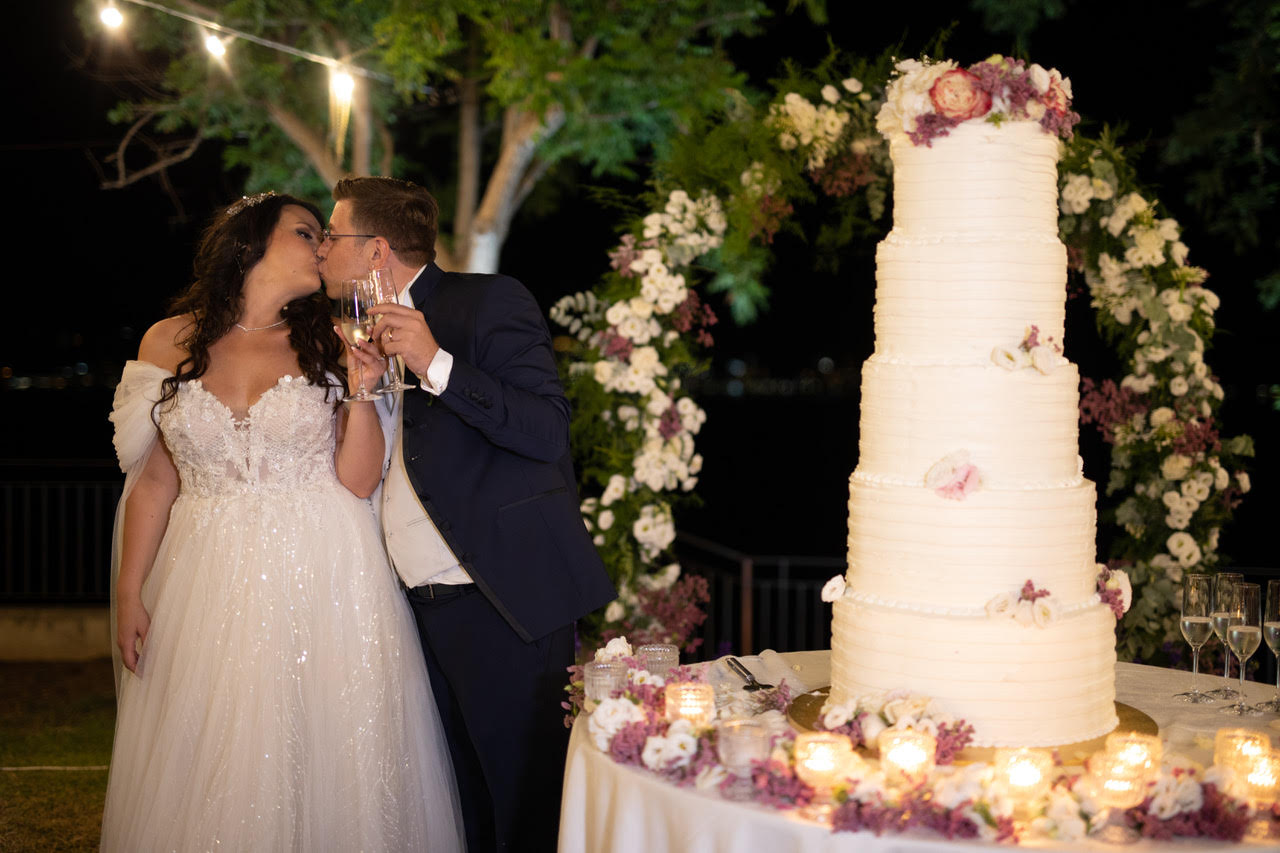
The cutting of the wedding cake is the highlight of the reception—an iconic, picturesque moment that remains etched in guests’ memories and photo albums. As the final act of the banquet, the wedding cake is not merely a dessert but a true design element that must balance aesthetics, taste, and flawless logistics.
Wedding Cake Styles and Architecture
The shape and structure of the cake must harmonize with the overall mood of the event:
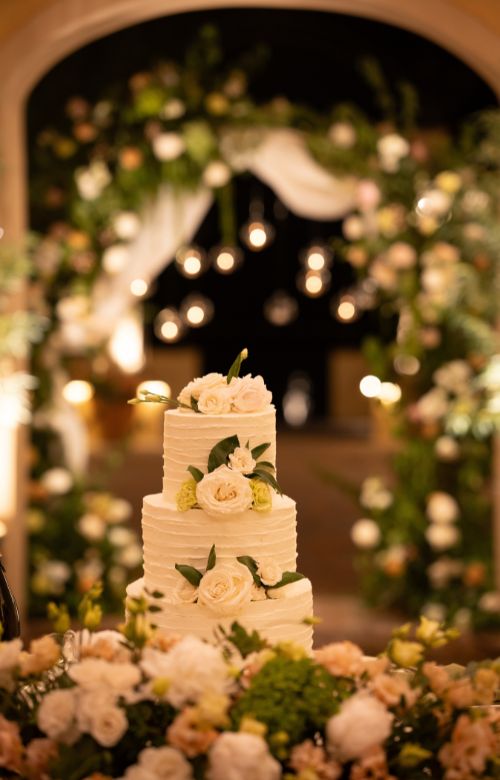
- Classic Tiered Cakes: The round shape is the ultimate symbol of continuity and union. Stacked tiers are perfectly suited to romantic, formal, and elegant weddings. For those seeking a contemporary touch, square-based cakes with offset tiers offer a sophisticated geometric alternative.
- Naked Cake & Bucolic Style: For informal, country-chic, or outdoor events, the “naked cake”—whether single-tier or multi-tiered and exposed (decorated with fresh berries and edible or wildflowers)—creates a natural, authentic look.
- Current Trends (Drip Cakes and Similar Cakes): Following the success of drip cakes (characterized by their signature glaze drizzles), modern patisserie has introduced “similtorte”—spectacular pyramidal arrangements of individual portions and high-end finger foods. It is an impressive option that ensures a variety of flavors and dynamic service.
Historical Trivia:Although cake design is extremely popular today, the first cake decorated with sugar paste and royal icing was created in 1840 for the wedding of Queen Victoria of England and Prince Albert of Saxe-Coburg (the same event that cemented the tradition of the white wedding dress).
Seasonality, Tasting, and Intolerances
The success of the dessert buffet and the wedding cake lies in the balance of flavors:
- The Seasonal Factor: Rich creams and chocolate are perfect for autumn or winter weddings. In summer, it is preferable to opt for light mousses, flavored Chantilly creams, citrus, and fresh seasonal fruit so as not to make the end of the meal too heavy.
- The Tasting: Just as with the savory menu, tasting the cake and buffet pastries is a crucial step to arrange with the caterer or master pastry chef.
- Dietary Inclusivity: It is essential to provide certified alternatives for guests who are celiac, lactose-intolerant, or vegan, ensuring that the quality of the dessert remains exceptional for all guests.
Real Cake or Display Cake? Logistics and Practical Choices
Opting for one or more finished tiers (or a completely decorative display cake) addresses specific organizational and aesthetic needs:
- Service Efficiency: Impressive fondant or multi-tiered cakes are extremely heavy and delicate to transport. Using a showpiece cake for the photo opportunity allows the kitchen to have edible portions ready sliced and plated thereby reducing waiting times for guests.
- Complex Craftsmanship and Preservation: Artistic sugar-paste decorations require days of work and cannot guarantee the freshness of the ingredients inside. Furthermore, a purely decorative cake treated with specialized preservatives can be kept by the newlyweds as a tangible wedding memento for several years.
Orchestrating the Atmosphere: Music and Entertainment
The cake-cutting requires careful choreography to maximize emotional impact:
- Dedicated Soundtrack: Choose a track with a musical crescendo that complements the moment the spatula slices in and the subsequent toast.
- Entertainment and Lighting Design: For a spectacular finale, the cutting ceremony can be accompanied by fireworks, cold spark fountains (Sparkulars), lanterns, or custom-designed architectural lighting.
Wedding Cake Topper
The cake topper is the finishing touch that crowns the wedding cake. Beyond completing the cake’s design, it offers the perfect opportunity to express the couple’s style or add a personal, memorable touch to the cake-cutting moment.
Guide to Cake Topper Styles
| Style | Recommended Materials | Ideal For… |
| Minimal & Elegant | Mirrored acrylic (gold, silver, pink), clear plexiglass | Modern, urban, and sophisticated weddings |
| Rustic & Chic | Laser-cut wood, natural plywood, cork Country-chic, pastoral, or estate weddings | |
| Monogram or Lettering | Intertwined initials, surname (“Mr & Mrs”), phrases, or dates | Classic and traditional receptions |
| Custom Figurines | Ceramic, resin, polymer clay, miniatures created from photos | Couples looking for a touch of whimsy or sentimentality |
| Botanical & Natural | Fresh flowers, aromatic herbs, fruit, edible sugar elements | Naked cakes, semi-naked cakes, or eco-friendly weddings |
Practical Advice and Logistics
- Proportions and Weight: Ensure that the size and weight of the topper are in proportion to the top tier of the cake (a topper that is too heavy may sink into the mousse or damage the soft structures).
- Food Hygiene and Safety: If the cake topper contains non-edible wooden or metal parts intended to be placed directly into the cake, check that the pin is suitable for food contact or protected with edible film or piping tubes.
- Coordination with the Pastry Chef: Discuss your choice of topper with the master pastry chef or the catering company well in advance, so that they can provide the appropriate support structure.
Frequently Asked Questions about the Wedding Cake
How long before the wedding should the wedding cake be finalised?
It is advisable to finalise the design and flavour of the cake at least 2 or 3 months before the event, especially if it requires complex cake design work or co-ordinated floral arrangements.
How do you work out the portions if you choose a dessert buffet alongside the wedding cake?
When the cutting of the wedding cake is accompanied by a large dessert buffet, the portion size of the wedding cake can be reduced (to around 80–100g per person) to avoid waste, whilst still maintaining the visual impact of the main cake.
If we choose a showpiece cake, how does the symbolic cutting take place?
Generally, a showpiece cake features a small ‘real’ portion positioned at the back or on the lower tier, allowing the bride and groom to make the first actual cut for the photos and the toast.

